When most people picture an excavating contractor, they imagine someone in a hard hat sitting inside a big yellow machine, digging a hole. That image isn’t wrong but it’s only about 10% of the story. Excavation is one of those trades where the real work happens long before the first bucket hits the dirt, and the quality of that work decides whether everything built on top of it stands strong for decades or starts cracking in a few years.
Whether you’re planning a new home, a commercial building, a driveway, a pool, or even something as simple as a drainage fix, excavation is almost always the first physical step. And it’s the step that quietly shapes the success of everything that follows.
Here’s a closer, more informative look at what these contractors actually do and why their role matters more than most homeowners and even some builders realize.
Excavation Is Site Preparation, Not Just Digging
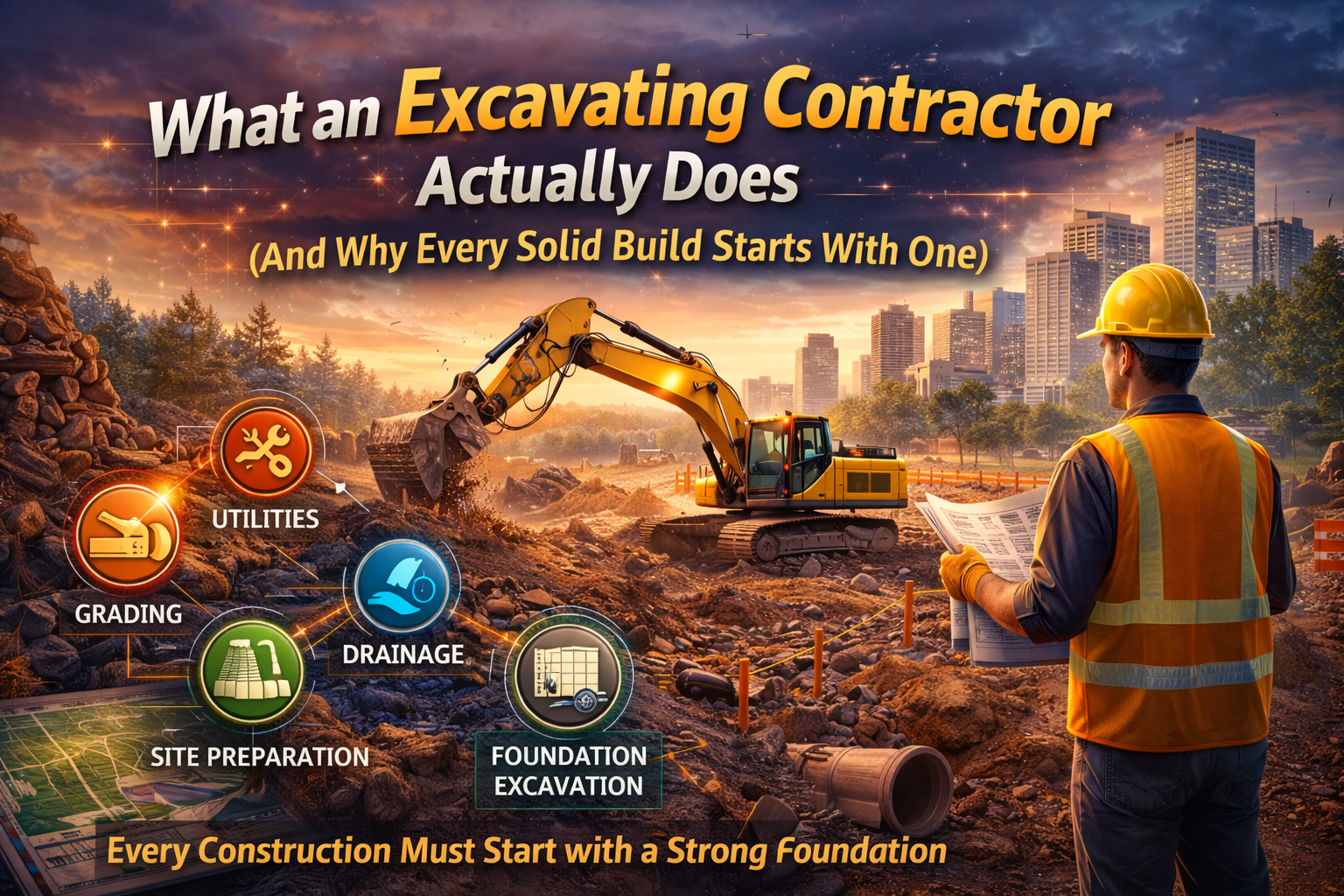
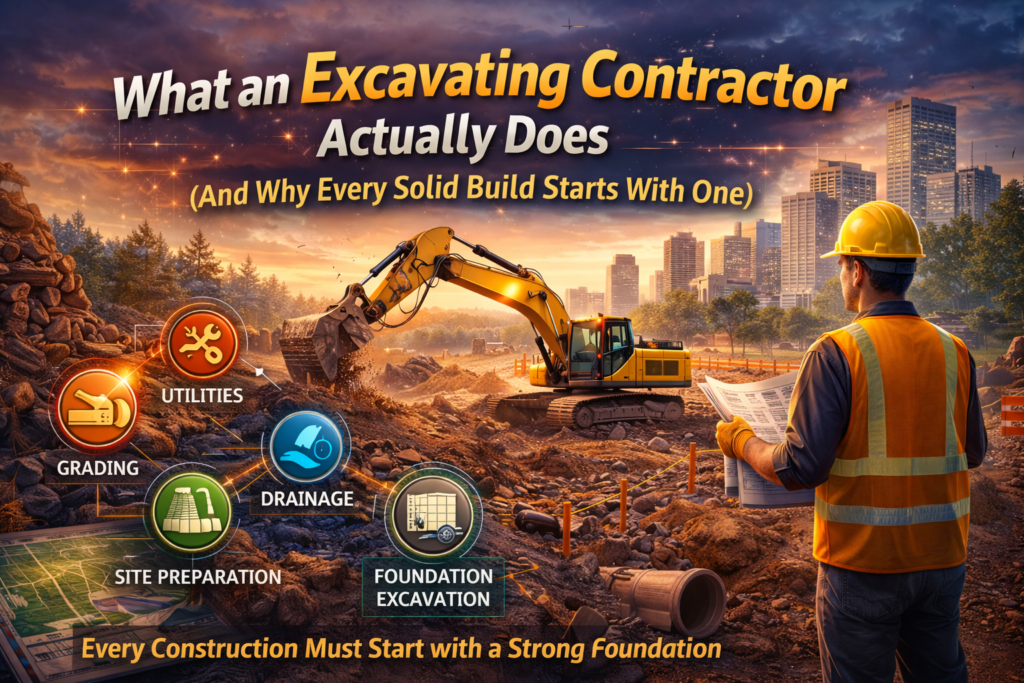
The core job of an excavating contractor is to take a piece of land and turn it into a buildable site. That means clearing, digging, shaping, leveling, and stabilizing the ground to match the exact specifications of a construction plan.
On a typical project, this can include:
- Clearing trees, brush, rocks, and old structures
- Stripping and stockpiling topsoil
- Digging foundations, basements, and footings
- Cutting and filling to achieve proper elevations
- Trenching for utilities
- Building temporary access roads for heavy equipment
- Final grading once construction is complete
Every one of those steps has a ripple effect. A foundation dug even slightly off-spec can throw off framing later. Poor grading can send rainwater toward a building instead of away from it. Skipping proper soil compaction can lead to settling cracks years down the line. Good excavation is invisible when it’s done right and painfully obvious when it isn’t.
Grading: The Unsung Hero of Every Project
Grading is probably the most underrated part of excavation. It’s the process of shaping the ground to a specific slope and elevation, and it controls two things that matter enormously for any structure: stability and water flow.
A properly graded site moves water away from your foundation, driveway, and landscaping. A poorly graded one creates puddles, erosion, basement leaks, and long-term structural problems. Experienced excavators use laser and GPS-guided equipment to hit elevations within fractions of an inch which is a huge leap from the old “eyeball it” days and a big reason modern excavation is far more precise than it used to be.
If you’ve ever seen a yard where water pools near the house every time it rains, that’s almost always a grading issue. And fixing it after the fact is far more expensive than getting it right the first time.
Underground Utilities and Drainage
Another major responsibility people don’t always associate with excavation is underground utility work. Water lines, sewer lines, storm drains, electrical conduits, gas lines, and telecom fiber all have to be trenched in before a building goes up and they have to be installed at the right depth, with the right slope, and without disturbing anything already buried on the property.
This is why a reputable Excavating Contractor Allentown will always call in utility locators before breaking ground. Hitting an unmarked gas or electric line isn’t just expensive it’s dangerous. Part of what you’re paying a good excavator for is the knowledge of what’s under the surface and the discipline to work around it safely.
Drainage systems fall under the same umbrella. French drains, retention basins, culverts, and stormwater management features are all designed and installed during the excavation phase. Done well, you’ll never think about them again. Done poorly, they’ll haunt the property for years.
Soil, Compaction, and Why the Dirt Itself Matters
One thing that surprises a lot of first-time clients is how much attention excavators pay to the dirt. Not all soil is the same some is dense and stable, some is loose and shifts under weight, some holds water, some drains too fast. Before any foundation goes in, the contractor has to understand what they’re working with.
That’s why compaction is such a big part of the job. After digging and backfilling, excavators use rollers and compactors to press the soil into a dense, stable base. If this step is rushed or skipped, the ground underneath a structure can settle unevenly over time, causing cracks in foundations, driveways, and slabs.
On bigger projects, excavators also perform or coordinate soil testing to check bearing capacity and moisture content. It’s a small upfront cost that prevents massive headaches later.
Equipment and Why It Actually Matters
Excavation is an equipment-heavy trade, and the machines a contractor uses (and how well they’re maintained) say a lot about the quality you can expect. A typical jobsite might include:
- Excavators for digging foundations, trenches, and deep cuts
- Bulldozers for pushing and rough-grading large volumes of material
- Skid steers and compact loaders for tight spaces and finish work
- Motor graders for precise leveling
- Compactors and rollers for soil stabilization
- Dump trucks for hauling material on and off site
The right machine for the right job saves time, reduces waste, and produces a cleaner result. A contractor showing up to a residential lot with a fleet of oversized equipment is as much of a red flag as one showing up to a big commercial project with a single mini-excavator. Matching the tools to the scope is part of the expertise.
Safety and Permitting
Excavation is also one of the most heavily regulated parts of construction and for good reason. Trench collapses, utility strikes, and unstable slopes are among the most serious hazards in the industry. Professional excavating contractors follow OSHA protocols for trench shoring, slope protection, and confined-space work, and they’re responsible for keeping the jobsite safe for everyone on it.
They also handle permits. Most excavation work requires local approvals before a shovel touches the ground, and a good contractor knows exactly which permits are needed, who pulls them, and how to keep the project compliant from start to finish. This is one of those behind-the-scenes pieces that saves property owners a huge amount of stress.
Why Excavation Quality Determines Project Quality
Here’s the big takeaway: everything built on a property sits on top of excavation work. The foundation, the structure, the driveway, the landscaping, the drainage all of it depends on the ground being prepared correctly. When excavation is done well, the rest of the project runs smoother, costs less in surprises, and lasts longer. When it’s rushed or sloppy, the problems show up months or years later usually in the form of cracks, leaks, settling, or water damage that’s expensive to fix.
That’s why experienced builders treat their excavating contractor as one of the most important partners on a project, not just a vendor who moves dirt. The contractor’s judgment, precision, and attention to detail in those first few weeks can quietly save a homeowner tens of thousands of dollars down the line.
Final Thoughts
Excavation is one of those trades that rewards experience in ways you can’t see from the street. Anyone can operate a machine, but reading a site, anticipating soil behavior, planning drainage, coordinating utilities, and hitting elevations precisely that’s the craft. If you’re planning any kind of construction project, understanding what excavation involves helps you ask better questions, set better expectations, and end up with a result that holds up for the long haul.
The dirt work may be the first step, but it’s the one everything else depends on.